Description
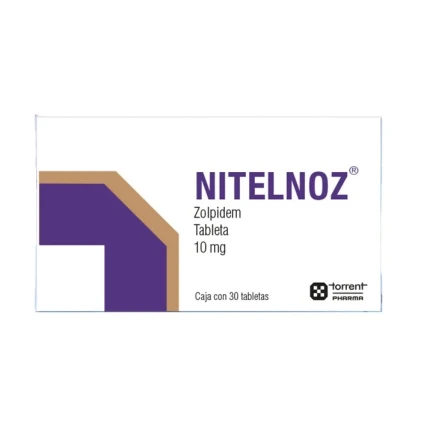
NITELNOZ ZOLPIDEM 10MG 30 TABLETS
Zolpidem is a hypnotic belonging to the imidazopyridine family. Experimental studies have shown a sedative effect at doses lower than those necessary to obtain anticonvulsant, muscle relaxant or anxiolytic effects. These effects can be explained by a selective agonist action of the GABA-omega macromolecular receptor complex, modulating the opening of the chloride channel. Zolpidem binds preferentially under the omega 1 subtype. In humans, zolpidem shortens sleep time, reduces the number of nocturnal awakenings, increases sleep duration, and improves sleep quality. These effects are associated with a characteristic electroencephalographic profile, which differs from that of benzodiazepines. Nocturnal sleep monitoring studies have shown that zolpidem prolongs phase II, as well as phases III and IV (deep sleep). At the recommended dose, zolpidem does not influence the total duration of paradoxical sleep (REM or Rapid Eye Movement).
Absorption: After oral administration, zolpidem has a bioavailability of 70%, reaching a maximum plasma concentration between 0.5 and 3 hours.
Distribution: Zolpidem has linear and non-saturable pharmacokinetics in the therapeutic dose range. Its volume of distribution is 0.54 ± 0.02 L/kg.
Metabolism: Zolpidem is almost completely metabolized to inactive compounds; presenting a protein binding of approximately 92%. Zolpidem has no inducing effect on liver enzymes.
Excretion: Zolpidem is excreted as inactive metabolites (hepatic metabolism), mainly in urine (about 60%) and feces (about 40%). It does not have an inducing effect on liver enzymes.
The plasma elimination half-life is on average 2.4 hours (0.7-3.5 hours).
In the elderly subject, a decrease in hepatic clearance is observed. The peak concentration is increased by approximately 50% without significant prolongation of the half-life (3 hours on average). The volume of distribution decreases to 0.34 ± 0.05 l/kg.
In patients with renal failure, whether dialyzed or not, a moderate decrease in renal clearance is observed.
The other kinetic parameters are not modified. Zolpidem is not dialyzable.
In patients with severe hepatic impairment, the bioavailability of zolpidem is increased. Its clearance is significantly reduced and the elimination half-life is prolonged (approximately 10 hours).


Reviews
There are no reviews yet.