Description
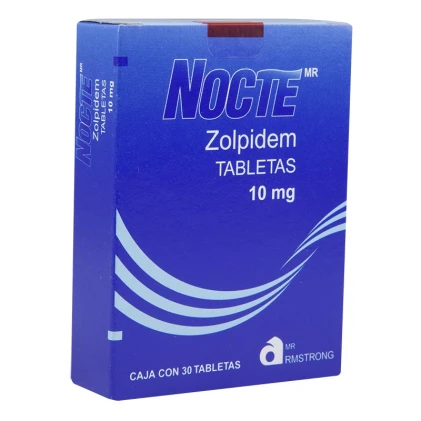
NOCTE ZOLPIDEM 10MG 30 TABLETS
PHARMACOKINETICS AND PHARMACODYNAMICS:
Zolpidem is a hypnotic belonging to the imidazopyridine family. Experimental studies have shown a sedative effect at doses lower than those necessary to obtain anticonvulsant, muscle relaxant or anxiolytic effects. These effects can be explained by a selective agonist action of the macromolecular GABA-omega receptor complex, modulating the opening of the chloride channel. Zolpidem is preferentially fixed under the omega 1 subtype. In humans, zolpidem shortens sleep time, reduces the number of nocturnal awakenings, increases sleep duration and improves its quality. These effects are associated with a characteristic electro-encephalographic profile, which differs from that of benzodiazepines. Overnight sleep monitoring studies have shown that zolpidem prolongs phase II, as well as phases III and IV (deep sleep). At the recommended dose, zolpidem does not influence the total duration of paradoxical sleep (REM or Rapid Eye Movements).
Absorption: After oral administration, zolpidem has a bioavailability of approximately 70% with a maximum plasma concentration between 0.5 and 3 hours.
Both the absorption and the onset of the hypnotic effect of zolpidem are rapid. At therapeutic doses, it shows linear kinetics. The therapeutic plasma level is between 80 and 200 ng/mL. With zolpidem sublingual tablet maximum plasma concentrations are achieved between 0.25 and 3.5 hours after administration. The mean time to Cmax was similar compared to a conventional tablet. However, early plasma concentrations at 5-15 minutes were higher with zolpidem Sublingual Tablet.
Distribution: At therapeutic doses, its pharmacokinetics is linear. Plasma protein binding is approximately 92%. The volume of distribution in adults is 0.54 ± 0.02 L/Kg and decreases to 0.34 L/kg in elderly people.
First-pass metabolism in the liver corresponds to approximately 35%. It has been shown that repeated administration does not modify protein binding, indicating the absence of competition between zolpidem and its metabolites for binding sites.
Elimination: The elimination half-life is short. Zolpidem is eliminated as inactive metabolites (hepatic metabolism), mainly in urine (about 60%) and feces (about 40%). It does not have an inducing effect on liver enzymes.
The mean value of the elimination half-life of zolpidem after administration was 2.85 hours (5 mg) and 2.65 hours (10 mg). The duration of action of zolpidem is up to 6 hours.
The plasma elimination half-life is on average 2.4 hours (0.7-3.5 hours).
All metabolites are pharmacologically inactive and are excreted in urine (56%) and feces (37%).
In trials, zolpidem has been shown not to be dialyzable.
Special populations: In the elderly subject, a decrease in hepatic clearance is observed. The peak concentration is increased by approximately 50% without significant prolongation of the half-life (3 hours on average). The volume of distribution decreases to 0.34 ± 0.05 L/kg.
In patients with renal failure, whether dialyzed or not, a moderate decrease in renal clearance is observed. No dose adjustment is necessary in patients with compromised renal function.
The other kinetic parameters are not modified. Zolpidem is not dialyzable.
In patients with severe hepatic impairment, the bioavailability of zolpidem is increased. Its clearance is significantly reduced and the elimination half-life is prolonged (approximately 10 hours).
Pharmacodynamics:
Pharmacotherapeutic group: Hypnotics and Sedatives, Drugs related to benzodiazepines.
ATC code: N05CF02.
Zolpidem, an imidazopyridine, is a hypnotic agent analogous to benzodiazepines. In experimental studies, it has been shown to have sedative effects at doses lower than those necessary to exert anticonvulsant, muscle-relaxing or anxiolytic effects. These effects are related to a specific agonist action on central receptors belonging to the “macromolecular GABAA-ω receptor complex (BZ1 and BZ2)”, which modulates the opening of the chloride ion channel. Zolpidem acts mainly on the ω1 (BZ1) receptor subtypes.
Zolpidem has been shown to be effective in the short-term treatment of insomnia, which is characterized by difficulties initiating sleep.
In general, zolpidem sublingual tablets at a dose of 5 mg reduce the latency period to persistent sleep by approximately ten minutes compared to conventional tablets containing 10 mg.
Zolpidem also stimulates sleep maintenance. No differences have been observed in sleep maintenance efficacy parameters (wakefulness after sleep onset and total sleep duration) between sublingual tablets and conventional oral tablets.
Zolpidem is indicated for the short-term treatment of transient insomnia. A study showed usefulness in the treatment of chronic insomnia, NOCTE® allows rapid falling asleep, reduces the number of nocturnal awakenings, increases the duration of sleep and improves its quality.


Reviews
There are no reviews yet.