
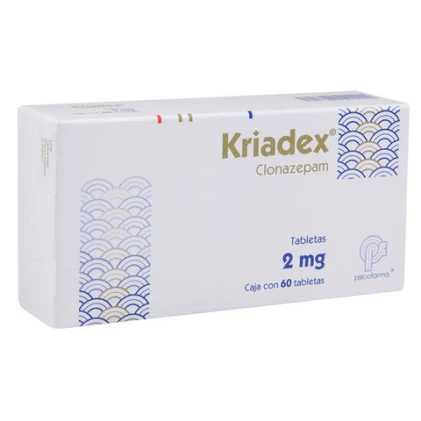
Description
Clonazepam is a benzodiazepine with an antiepileptic effect, being an effective agent of choice for the treatment of childhood epilepsy and myoclonic seizures.
In chronic epileptic encephalopathies of the child: Call West syndrome or Lennox-Gastaut syndrome, as well as in chronic partial epilepsy; focal seizures and complex adult seizures. It is useful in absence seizures, whose treatment has failed with other antiepileptic drugs. Clonazepam is also used in states of agitation due to withdrawal syndrome or acute withdrawal from alcohol and Delirium tremens.
Another therapeutic application of clonazepam is in status epilepticus and in seizures induced by other drugs. Clonazepam can also be used in the treatment of muscle spasms due to local pathologies such as inflammation or trauma to muscles or joints; athetosis, stiff man syndrome; tetanus; or spasticity due to upper motor neuron diseases such as cerebral palsy.
Clonazepam, also due to its anxiolytic effect, is also indicated for the treatment of panic disorder or disorder, with or without agoraphobia. Clonazepam is an alternative in obsessive-compulsive disorders resistant to classical pharmacotherapy. For post-traumatic stress disorders, additionally all benzodiazepines have been widely used to treat social phobia; however, only with clonazepam it has been confirmed in several double-blind controlled clinical studies that it has good efficacy. In summary, there is a large body of evidence for the efficacy and safety of clonazepam in adult anxiety disorders, but there are not yet enough formal studies demonstrating similar benefits in children with anxiety disorders.
On the other hand, there are several very recent reports of the use of clonazepam in sleep disorder due to periodic movements of the legs as well as other innovative uses such as its use during the acute phase of mania, there are also reports that recommend it as an adjunct therapy with lithium or with mood stabilizers or as an alternative to neuroleptics in the treatment of manic breakdown and in agitated and / or potentially aggressive psychotic patients.
Clonazepam with its anticonvulsant properties that together with its anxiolytic and muscle relaxant properties stand out from other benzodiazepine derivatives. Neurophysiological studies carried out in man suggest that clonazepam selectively inhibits the activity of the epileptogenic focus and thus prevents the generalization of seizures. Clinical experimentation has amply confirmed these results and demonstrated that, even in epileptic syndromes refractory to classical treatment, clonazepam alone or in combination with previous therapy allowed in most cases to reduce the frequency and intensity of the seizure, also influencing favorably on clinical electroencephalogram and behavioral disorders.
Clinical Advantages: The major clinical advantages of this benzodiazepine are its high efficacy, rapid onset of action and low toxicity. Unwanted effects can be prevented by maintaining minimal doses (less than 2 mg / day) and short courses (ideally 4 weeks maximum) and with careful patient selection. Long-term prescriptions are required occasionally for certain patients.




Reviews
There are no reviews yet.