
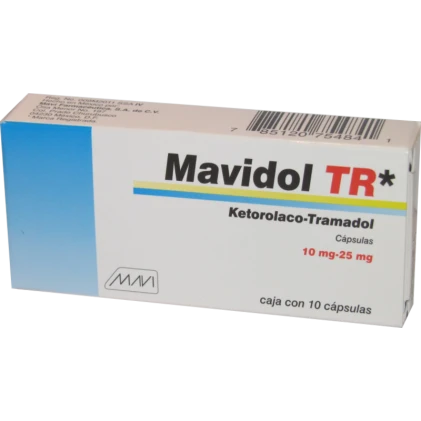
Description
Mavidol, also known as Mavidol TR, is a combination drug that is actively used in medicine for pain relief. This drug combines two active ingredients: ketorolac and tramadol, in dosages of 10 mg and 25 mg, respectively. Mavidol is used in various fields of medicine to manage moderate to severe pain, often after surgery or in cases of severe injuries.
Mavidol para que sirve?
The main purpose of Mavidol is to relieve pain. Its constituent ketorolac is a non-steroidal anti-inflammatory drug (NSAID) that helps reduce inflammation, pain and fever. Tramadol, on the other hand, belongs to opioid analgesics and acts on the central nervous system, thereby reducing the sensation of pain.
The price of Mavidol TR may vary depending on the region of sale, manufacturer and pharmacy. It is important to note that the purchase and use of this drug should be carried out strictly on the prescription of a doctor, taking into account all medical indications and contraindications.
Dosage
The dosage of the combination drug Madivol TR, containing ketorolac and tramadol in the ratio of 10 mg to 25 mg, respectively, is a key factor in achieving effective treatment and minimizing the risk of side effects. This drug is designed to manage moderate to severe pain syndromes, including postoperative pain, trauma and other conditions requiring a powerful analgesic effect.
Basic principles of dosage
- Initial dose: Usually, the initial dose of Madivol TR should not exceed one tablet (containing 10 mg ketorolac and 25 mg tramadol) taken orally. It is important to strictly follow the doctor’s recommendations, as the dosage may be adjusted depending on the individual characteristics of the patient, including weight, age, general health and response to treatment.
- Frequency of administration: In adult patients, it is usually recommended to take the drug every 4–6 hours, depending on the intensity of the pain syndrome. It is important not to exceed the maximum allowable daily dose and not to prolong the course of treatment without consulting a doctor.
- Maximum Dosage: The maximum daily dose for adults is usually 40 mg of ketorolac (included in four Madivol TR tablets) and 100 mg of tramadol. Exceeding this dose may significantly increase the risk of side effects and complications.
- Duration of treatment: The course of treatment with Madivol TR should be as short as possible, taking into account the risk of side effects, especially those associated with ketorolac. Usually, it is not recommended to take the drug for more than five consecutive days.
Side effects
Side effects from the use of Madivol TR can range from mild to serious and require attention from both the patient and medical staff.
- Gastrointestinal tract: Nausea, vomiting, dyspepsia, gastritis, gastrointestinal bleeding and ulcers may be caused by ketorolac.
- Central nervous system: Dizziness, drowsiness, headache, and irritability may occur due to the effects of tramadol. In rare cases, seizures may occur.
- Kidneys and liver: Increased level of liver enzymes, renal failure and other renal and liver disorders may be associated with prolonged use of the drug.
- Hematopoietic System: Anemia, thrombocytopenia, and other blood disorders may occur as side effects, especially with long-term use of the ketorolac component of Madivol TR.
- Cardiovascular System: Increased blood pressure, tachycardia, and other cardiovascular reactions may occur in response to the use of this drug, especially in patients with existing cardiac problems.
- Allergic Reactions: Rash, itching, urticaria, Quincke’s edema, and in rare cases, anaphylactic shock may be caused by the components of Madivol TR, especially in individuals with a predisposition to allergies.
- Psychological effects: Mood changes, hallucinations, psychosis, and dependence may develop, especially with long-term use of tramadol contained in the drug.
- Respiratory system: Respiratory depression may occur with high doses of tramadol, which is especially dangerous for patients with existing respiratory disease.
Interactions
-
With other NSAIDs and antithrombotic agents: Ketorolac, which is part of Madivol TR, belongs to non-steroidal anti-inflammatory drugs (NSAIDs). Using ketorolac together with other NSAIDs may increase the risk of gastrointestinal ulcers and bleeding. In addition, the combination of ketorolac with antithrombotic agents (e.g. aspirin, warfarin) increases the risk of bleeding, which requires special caution when prescribing.
-
With opioid analgesics: Tramadol, another component of Madivol TR, is an opioid analgesic. Concomitant use with other opioids (e.g., morphine, oxycodone) may increase central depression, increasing the risk of respiratory depression, profound sedation, and other serious side effects.
-
With selective serotonin reuptake inhibitors: Simultaneous administration of tramadol and selective serotonin reuptake inhibitors (SSRIs) or serotonin-norepinephrine reuptake inhibitors (SNRIs) may lead to the development of serotonin syndrome, a potentially life-threatening condition characterized by fever, hyperreflexia, changes in mental status.
-
With alcohol and centrally acting drugs: Taking Madivol TR together with alcohol or other drugs that have a depressant effect on the central nervous system (e.g. benzodiazepines, barbiturates) may significantly increase depression, cause deep sedation, difficulty breathing and even lead to coma.
-
With monoamine oxidase inhibitors: The combination of tramadol with monoamine oxidase inhibitors (MAOIs) may lead to severe side effects, including serotonin syndrome, arterial hypertension and severe central nervous system disorders. Therefore, at least 14 days should elapse between taking an IMAO and starting treatment with tramadol to avoid potentially dangerous interactions.
-
With antibiotics and antifungal agents: Some antibiotics and antifungal agents, especially those that inhibit the enzyme CYP3A4 or CYP2D6, may alter the metabolism of tramadol, affecting its efficacy and safety. Increased blood concentrations of tramadol may increase both therapeutic and side effects, including the risk of respiratory depression.
-
With drugs for the treatment of epilepsy: Drugs used to control epilepsy, such as carbamazepine, phenytoin and other liver enzyme inducers, may accelerate the metabolism of tramadol, reducing its efficacy and shortening the duration of analgesic effect. This requires dose adjustment or selection of an alternative method of treatment.
-
Drugs causing QT-interval prolongation: Tramadol, like many other drugs, may contribute to QT-interval prolongation on the ECG. This condition can be exacerbated when combined with other drugs known to affect the QT interval and increase the risk of ventricular arrhythmias, such as torsade de pointes.
-
With hypotensive drugs: Madivol TR may affect blood pressure by increasing the hypotensive effect of antihypertensive drugs. This may result in a sudden drop in blood pressure, dizziness and loss of consciousness, especially when getting up from a lying or sitting position.
Contraindications
- Allergic Reactions: Patients with a known allergy to ketorolac, tramadol, or any other constituents of the drug should avoid its use.
- Renal and hepatic insufficiency: Madivol TR may have an adverse effect on renal and hepatic function, therefore it is not recommended for use in existing diseases of these organs.
- Gastrointestinal diseases: Due to the ketorolac content, which may cause or aggravate ulcers and bleeding, the drug is contraindicated in persons with active or recurrent GI ulcers.
- Pregnancy and lactation: The drug is not recommended for use during pregnancy, especially in the third trimester, and during breastfeeding due to the potential risk to the fetus or newborn.
- Cardiovascular diseases: Patients with serious cardiovascular diseases, such as unstable angina pectoris or recent myocardial infarction, should avoid the use of this drug.
- Pediatric age: Madivol TR is generally not recommended for use in children due to the lack of sufficient safety and efficacy data.
Duration of action
The duration of action of Madivol depends on the pharmacokinetic properties of its components – ketorolac and tramadol. Ketorolac is characterized by rapid onset of action, usually within 30 minutes after administration, and duration of analgesic effect up to 6 hours. Tramadol, in turn, begins to act about an hour after administration and has a longer duration of action, which can last from 6 to 8 hours.
Thus, the combined action of Madivol TR can provide analgesic effect for about 6 to 8 hours. It is important to note that individual differences in metabolism and body characteristics may affect the duration of action of the drug in different patients.
Excretion from the body
Ketorolac is metabolized in the liver with the formation of several metabolites, most of which have no pharmacological activity. After metabolism, ketorolac and its metabolites are excreted mainly by the kidneys. Approximately 91% of the administered dose of ketorolac is excreted with the urine, both as metabolites and unchanged, within 24 hours of administration.
Tramadol is also extensively metabolized in the liver, producing several metabolites, including O-desmethyltramadol, which has significant analgesic activity. Tramadol and its metabolites are mainly excreted by the kidneys. About 90% of a tramadol dose is excreted within 24 hours as metabolites and, to a lesser extent, unchanged.
What is Mavidol in English?
When asking a question about “Mavidol TR in English”, a person is most likely looking for information about the medicine known as Mavidol TR, including its composition, uses and other important details.
Is Mavidol the same as Tramadol?
The main difference between Mavidol TR and Tramadol is that Mavidol TR is a combination of two active ingredients, one of which (tramadol) is also present in Tramadol as the only active ingredient. This means that Mavidol TR has a broader spectrum of action due to the addition of ketorolac, which gives it additional anti-inflammatory and antipyretic properties.
It is also important to note that the interaction between ketorolac and tramadol in Mavidol TR can potentially enhance the analgesic effect due to the synergy of the components, but also increases the risk of side effects and interactions with other drugs.


Reviews
There are no reviews yet.